Shirts and tees
Shirts for Men: Formal, Casual and Fit Guide
The right shirt for men comes down to three things: the collar, the fit and the fabric. Get those right and a plain white shirt works harder than ten trendy prints.

A shirt for men is the most useful thing in an Indian wardrobe. It goes to the office on Monday, to a cousin's sangeet on Saturday and to brunch on Sunday. Yet most men buy shirts by colour alone, then wonder why the collar collapses under a blazer or the sleeves bunch at the wrist.
This guide is about the parts that decide whether a shirt looks good on you: the collar, the cut through the body, the fabric and the size. Once you know those, picking formal shirts for men, casual shirts for men or a party wear shirt becomes simple. For full office outfits, see our formal dress guide; for colour pairing, see colour combinations for men.
Formal shirts vs casual shirts for men
The difference is not just colour. A formal shirt has a firmer collar that stands up under a tie or jacket, a smooth, tight weave, buttoned cuffs and a longer curved hem meant to stay tucked in. A casual shirt for men usually has a softer collar, a textured or printed fabric and a straighter, shorter hem that looks right untucked.
A simple rule: if the hem reaches the middle of your fly or lower, tuck it in. If it ends around the top of your back pockets, it is made to be worn out. Office dress codes in India have relaxed a lot, so a smart casual shirt in a plain colour now works in many workplaces, but client meetings, interviews and formal events still call for a proper formal shirt with formal trousers.
Shirt collar types and which one suits you
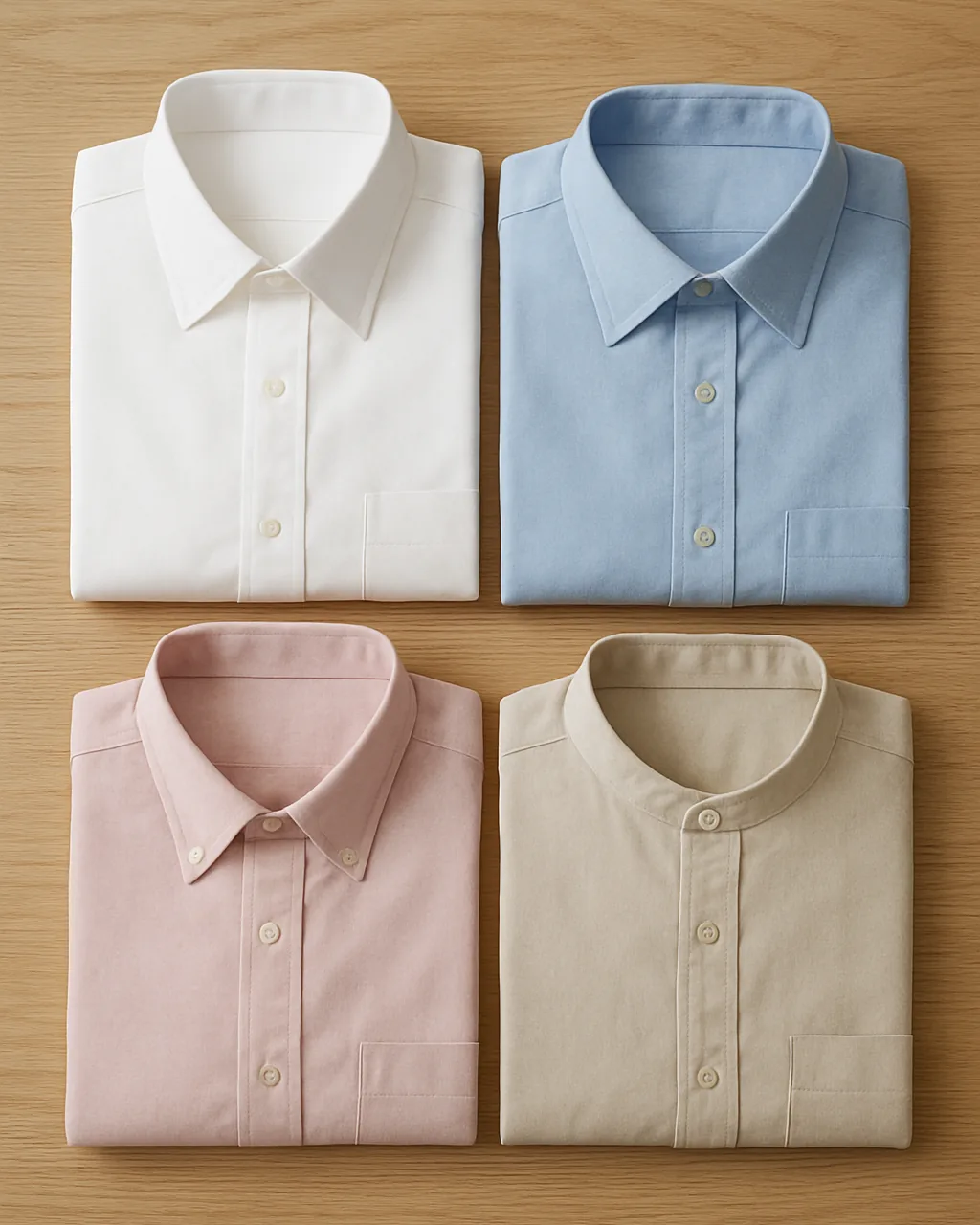
The collar frames your face, so it matters more than any print. These are the ones you will see most often.
Point collar
The standard collar on most men's shirts, with tips that sit fairly close together. It is the safe choice for office wear and suits men with round or wide faces, because the narrow angle adds length.
Spread and cutaway collar
A spread collar has more distance between the tips; a cutaway is a more extreme spread. It suits thicker tie knots and slim or long faces, and looks sharp under a blazer.
Button-down collar
The collar points button to the shirt. The style has a well-known origin: John E. Brooks, grandson of the Brooks Brothers founder, noticed English polo players buttoning their collar points, and the button-down shirt was first sold at the Brooks Brothers New York store in fall 1900. Today it reads smart casual: great with chinos, less so with a formal suit and tie.
Band or Mandarin collar
A short stand collar that does not fold down. It looks clean and slightly Indian in spirit, so it pairs well with a bandi or Nehru jacket and works for festive lunches without a tie.
Camp or Cuban collar
A flat, open collar common on printed and resort shirts. Wear it open, untucked, for holidays and summer evenings. It is not a work collar.
Shirt fits: slim, regular, relaxed and oversized
Fit is about how much fabric sits around your chest and waist. Pick by body shape, not by trend.
| Fit | How it sits | Best for |
|---|---|---|
| Slim fit | Tapered through the waist, higher armholes | Lean and athletic builds; tucked office looks |
| Regular fit | Straight through chest and waist | Most body types; men with a fuller midsection |
| Relaxed fit | Extra room in body and sleeves | Hot, humid weather; broad or heavy builds |
| Oversized | Dropped shoulders, boxy body | Casual streetwear, worn open or untucked |
Signs your shirt fits: the shoulder seam sits at the edge of your shoulder bone, the buttons lie flat without pulling into an X shape, you can pinch roughly two to three centimetres of spare fabric at each side of the chest, and the cuff ends where your wrist meets your hand. If buttons gape across the chest, go up a size or switch from slim to regular fit rather than living with it.
Shirt fabrics: cotton, linen, denim and blends
Cotton shirt for men: cotton is the seed-hair fibre of plants of the genus Gossypium, and it is the default for good reason. Poplin is smooth and crisp for office wear, oxford is thicker and slightly textured, and twill has a fine diagonal weave that resists creasing a little better.
Linen shirt for men: linen comes from the flax plant. Britannica notes it absorbs and releases moisture quickly and conducts heat well, so linen shirts feel cool, but its low elasticity means it wrinkles easily. That is the trade you accept for Chennai or Mumbai summers. Our linen clothes guide covers it in depth.
Denim shirt for men: heavier, durable and casual. A mid-blue denim shirt layers well over a T-shirt and pairs with black or grey trousers, but avoid matching it to the exact same shade of jeans.
Blends: polyester is strong and resists shrinking and creasing, with very low moisture absorption, so poly-cotton shirts are easy to iron but can feel warm. Viscose (rayon) is regenerated cellulose that drapes softly and is common in printed party wear shirts.
Colours and patterns: white, black, blue, pink and checks
Build your shirt wardrobe in this order.
- White shirt for men: the most versatile shirt you can own. Works for interviews, weddings under a bandhgala, and with jeans on weekends.
- Blue shirt for men: light blue flatters almost every Indian skin tone and hides wear better than white.
- Pink shirt for men: a soft pink with navy or grey trousers looks confident at the office and for day functions.
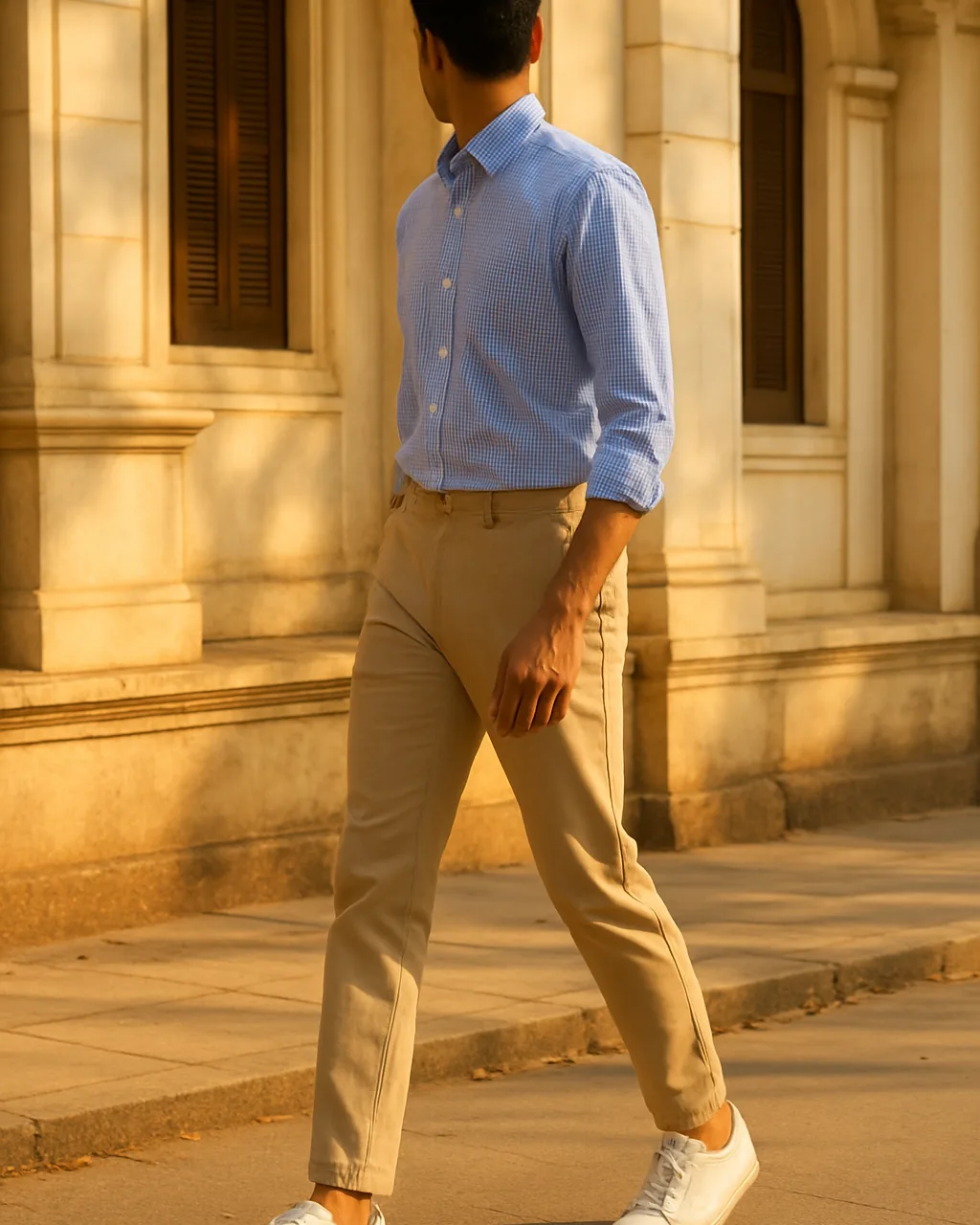
- Check shirt for men: small checks (gingham, tattersall) are smart casual; big checks and flannel are weekend shirts.
- Black shirt for men: strong for evenings and parties, too severe for most daytime offices. Pair with grey, beige or black trousers.
- Brown and red shirts: earthy brown and deep maroon suit warm undertones; keep bright red for casual or festive wear.
- Printed shirts for men: keep the rest of the outfit plain. Small prints are easier to wear than large ones.
Plain shirts for men in these shades will pair with almost everything you own. Trending shirts for men change every season; the basics do not.
Half sleeve shirts and party wear shirts
A half sleeve shirt for men (also called a half shirt) is a practical answer to Indian heat. Keep it casual: worn untucked with chinos, linen trousers or jeans. The sleeve should end around mid-bicep and sit close to the arm, not flare out. Avoid half sleeves under a blazer or with a tie.
Party wear shirts for men can be bolder: satin-finish or viscose fabrics, dark solids, subtle textures, or a printed shirt with a camp collar. For a wedding reception, a well-fitted dark shirt with a blazer often looks better than a loud print alone. If you prefer Indian wear for the occasion, see our kurta guide.
How to find your shirt size
Indian brands still use their own size charts, because no national standard has yet been widely adopted. So measure once and compare with each brand's chart.
- Neck: wrap the tape around the lower neck about an inch below the Adam's apple, leaving room for two fingers.
- Chest: wrap the tape under your armpits around the fullest part of your chest, snug, standing normally.
- Sleeve: measure from the top centre of your back below the collar to the shoulder point, then to the elbow, then to just above the wrist bone, and add the three.
- Shoulder: lay a shirt that fits you well face down, buttoned, and measure straight across from shoulder seam to shoulder seam.
- Compare: check whether the brand chart lists body or garment measurements, then choose the size that matches your chest first and neck second.
Our men's size guide has a converter and fit-ease checker to help with step five.
Shirt care that keeps collars sharp
Read the care label first: the washtub symbol shows the maximum wash temperature, and a cross over any symbol means do not use that treatment. Unbutton collars and cuffs before washing, wash dark and printed shirts inside out, and hang them to dry on a hanger so they keep their shape. Iron while slightly damp, collar first, then cuffs, sleeves and body. Rotate your shirts so no single collar gets worn every week.
Questions men ask
Which shirt colour suits Indian skin tone?
Light blue, white, soft pink, navy, olive and maroon flatter most Indian skin tones. If you have a warm undertone, earthy browns, rust and cream look good. If cooler, try greys, deep blues and crisp white. The safest first purchases are white and light blue because they work for office, functions and weekends.
What is the difference between slim fit and regular fit shirts?
A slim fit shirt tapers through the waist and has higher armholes, so it sits close to the body. A regular fit shirt runs straight from chest to hem with more room. Slim fit suits lean builds, while regular fit is more comfortable for men with a fuller midsection or for hot days.
Should a casual shirt be tucked in?
Look at the hem. If it is long and curved, reaching past the middle of your fly, it is meant to be tucked in. If it is short and straight, ending near the top of your back pockets, wear it out. Untucked shirts that are too long make your legs look shorter.
Are linen shirts good for Indian summer?
Yes. Linen absorbs and releases moisture quickly and conducts heat well, so it feels cooler than many fabrics in heat and humidity. The downside is that it creases easily because of its low elasticity. Choose a relaxed fit and accept some wrinkles as part of the look.
How many shirts should a man own?
For office wear five days a week, aim for at least five to seven shirts so you can rotate between washes. A useful starting set is two white, two light blue, one pink or check, one dark solid and one casual linen or denim shirt. Add prints only after the basics are covered.
How should a formal shirt fit at the collar?
When buttoned, you should be able to slide one or two fingers between the collar and your neck. Tighter than that pinches and wrinkles; looser makes the collar sag under a tie. Measure your neck about an inch below the Adam's apple and compare with the brand's neck size.
Sources: Brooks Brothers introduces button-down shirts (EBSCO) · Linen (Britannica) · How to measure for a shirt (Charles Tyrwhitt) · Polyester fiber (MFA Boston CAMEO) · Care symbols (GINETEX). Updated 14 October 2026.