Denim and trousers
Jeans for Men: Fits, Washes and How to Find Your Size
Most men own jeans that almost fit. Learn what slim, straight, relaxed and bootcut actually mean, which one suits your thighs and height, and how to buy the right waist and length first time.
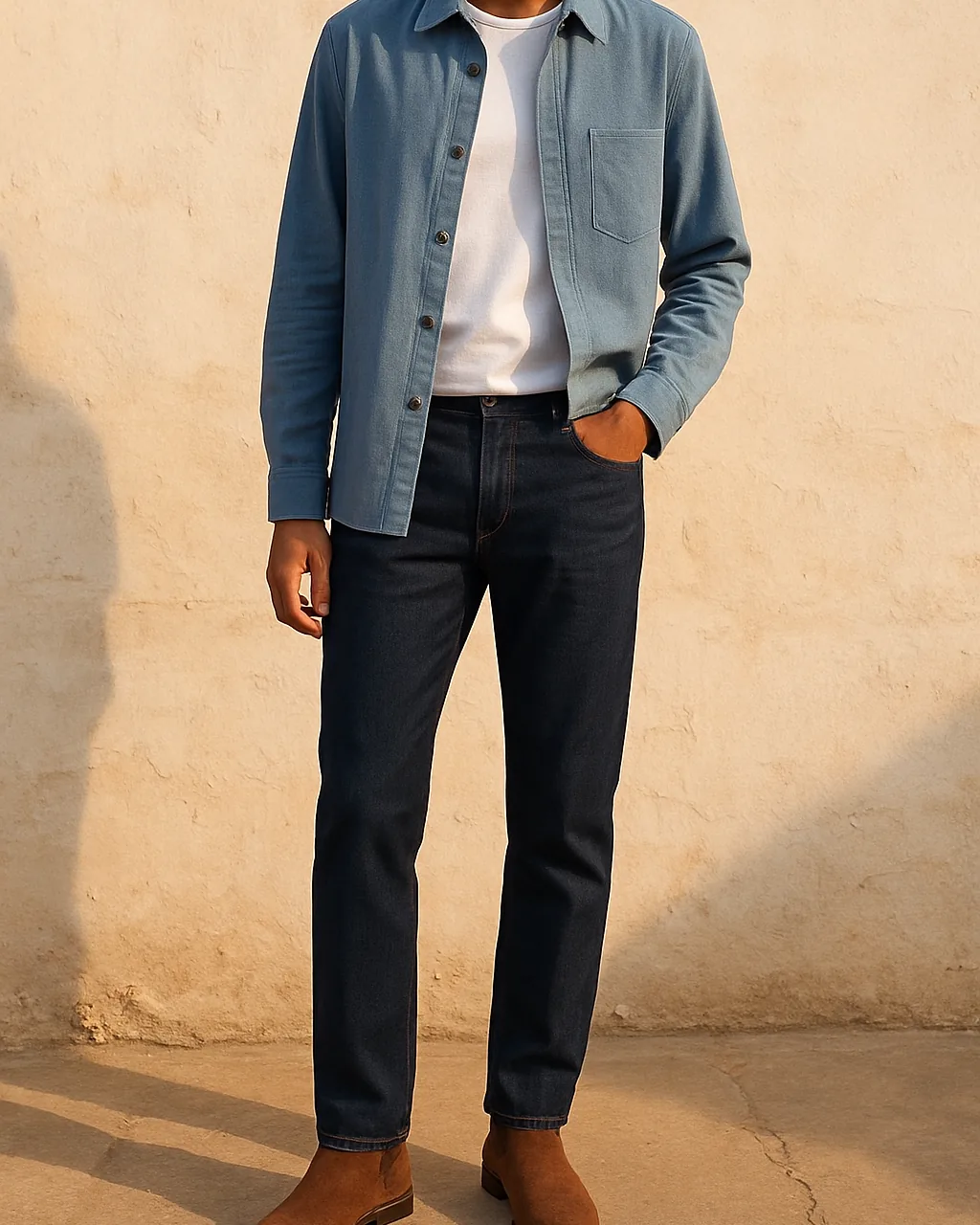
Jeans have a long and specific history: the patent for riveted work pants was granted to Jacob Davis and Levi Strauss & Co. on 20 May 1873, which the company describes as the moment "blue jeans were born." A century and a half later, jeans for men are the default bottom for college, weekends and plenty of offices in India.
The problem is choice. Shops sell slim, skinny, tapered, straight, relaxed, bootcut, loose and baggy, and the labels mean different things at different brands. This guide explains each fit, matches it to body types, then covers denim weight, washes, sizing and care. For other bottoms, see our guides to trousers and cargo pants.
Jeans fits explained
Levi's publishes clear definitions for its fits, and they are a useful reference because many brands copy the same ladder from tight to loose.
| Fit | How Levi's describes it | Who it suits |
|---|---|---|
| Skinny (510) | Hugs the legs tightly from thigh to ankle | Very slim builds; fashion-led looks |
| Slim (511) | Tailored fit with a narrower leg opening | Slim to average builds |
| Slim taper (512) | Narrower leg opening than the 511 | Men who want room up top, neat ankles |
| Straight (514) | Straight-leg cut with more room throughout | Almost everyone; the safest fit |
| Regular (505) | Classic straight leg, more space in thigh and knee | Average to heavier builds |
| Relaxed (550) | Much looser in the seat and thigh | Bigger builds; comfort first |
| Bootcut (517) | Wider leg opening to accommodate boots | Boot wearers; balancing broad shoulders |
| Athletic taper (541) | Designed for more muscular thighs and legs | Gym-goers, cyclists, footballers |
Levi's also lists "Loose & Baggy" and "Extra Baggy" categories without a formal definition, so treat "baggy" as a style word that varies by brand. Other brands use their own names, so compare the thigh and leg opening measurements on each size chart rather than trusting the label.
Which jeans fit suits your body
- Slim build: slim fit jeans for men or slim taper. Skinny can work, but it can make thin legs look thinner.
- Average build: straight fit jeans for men or slim. A dark straight fit is the most versatile pair you can own.
- Muscular legs: athletic taper or straight. Avoid skinny; it strains at the thigh and wrinkles at the knee.
- Heavier build or belly: regular, relaxed fit jeans for men or straight with a mid to high rise. A slightly wider leg balances the upper body.
- Short men: slim or straight with little or no stacking at the ankle. Too much fabric at the hem shortens the leg.
- Tall men: straight, bootcut or loose fits look natural; check the inseam options carefully.
Baggy, loose, bootcut and mom fit jeans
Baggy and loose jeans
Baggy jeans for men and loose fit jeans are popular again with oversized tees and sneakers. Keep the top half fitted or cleanly oversized, and make sure the waist actually fits, so the looseness is in the leg rather than sagging at the seat.
Bootcut and bell bottom
Bootcut jeans for men open slightly below the knee to sit over boots. A bell bottom flares much more widely from the knee and is a retro, statement look. Both look best with a heel, such as boots or chunky shoes.
Mom fit and relaxed taper
Mom fit jeans for men usually means a higher rise, roomy hip and thigh and a taper to the ankle. It suits a vintage, relaxed look with a tucked tee or short shirt.
Cargo jeans
Cargo jeans add patch pockets on the thigh. They borrow from cargo pants, so keep the rest of the outfit simple.
Washes and colours: blue, black, white and damaged
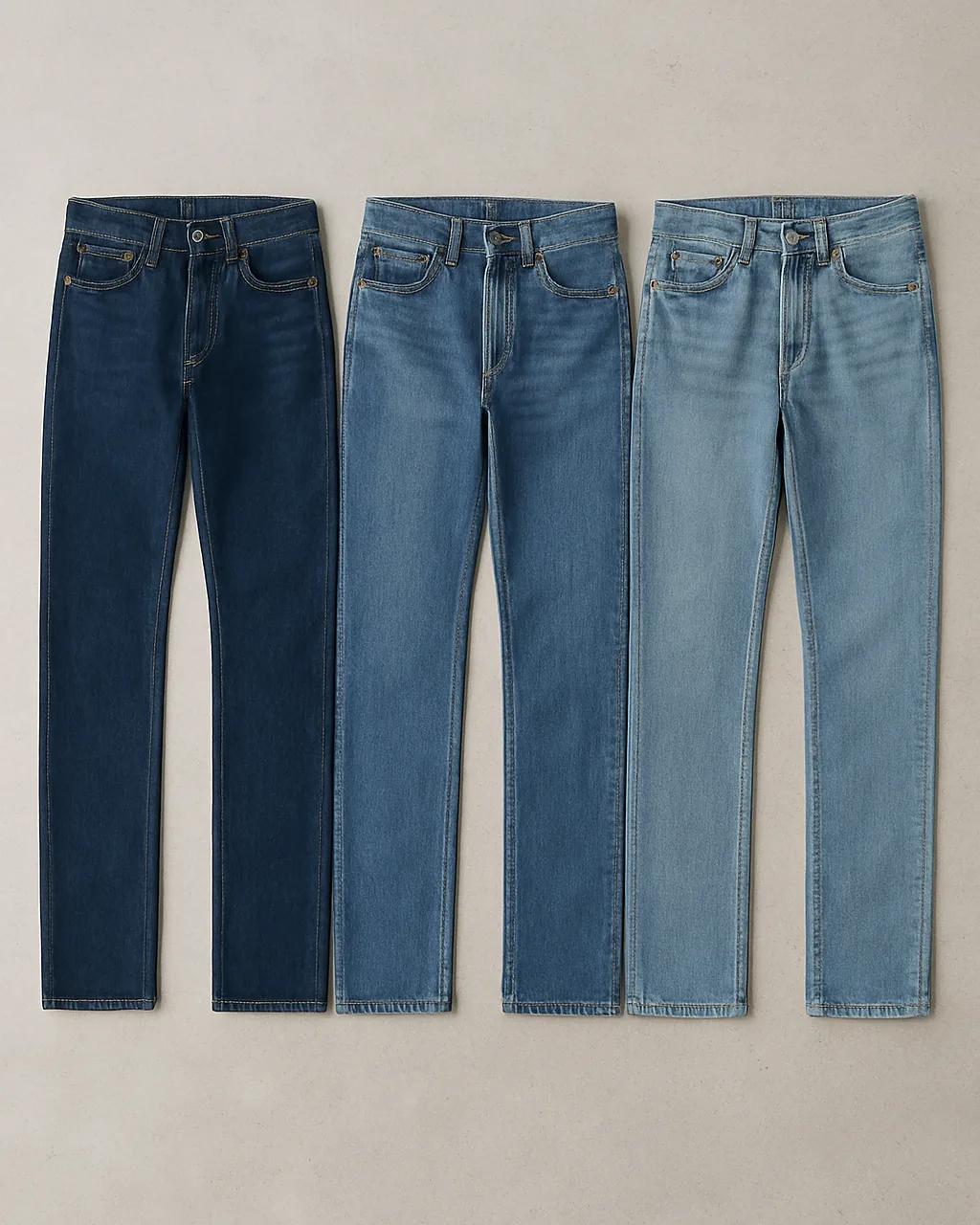
Dark blue (raw or rinse wash): the smartest denim. It can pass for smart casual with a shirt and loafers.
Mid and light blue jeans for men: casual, summer friendly and easy with white or pastel tops.
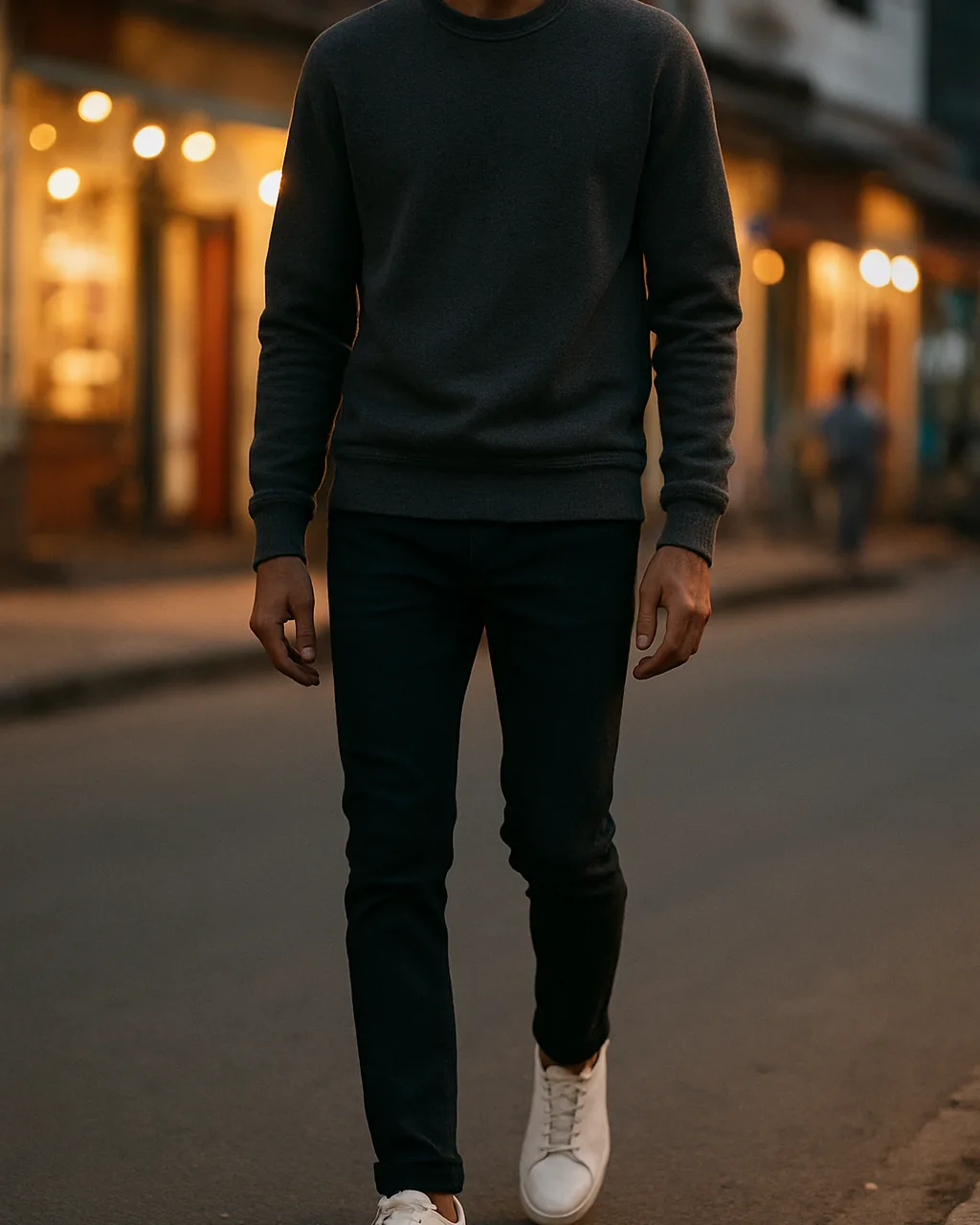
Black jeans for men: slimming and evening-ready. Grey and charcoal tops look sharp with them.
White jeans for men: a summer and holiday staple. Wear with navy, olive, beige or blue, and choose a thicker denim so pockets do not show through.
Damage and distressed jeans: rips and heavy fading are purely casual. Keep them for weekends and travel, not for office or family functions.
For pairing ideas by colour, see colour combinations for men.
Denim weight, stretch and selvedge
Denim weight is quoted in ounces per square yard. As a common convention, under 12 oz is lightweight, 12 to 16 oz is midweight and over 16 oz is heavyweight; one denim reference stresses these are "conventions, not rules." For Indian weather, light to midweight denim is the most comfortable year-round, while heavier denim suits Delhi winters.
Stretch denim adds a small amount of spandex (elastane), a fibre that can stretch at least 200%. It makes slim and skinny fits easier to move in but can bag at the knees over time.
Selvedge ("self-edge") denim is woven on older shuttle looms, which produce a finished edge that resists unravelling; most modern denim is made on faster projectile looms that do not produce this edge. You can spot selvedge on the inside of the outseam when you turn up the hem.
How to find your jeans size
Jeans are usually sold by waist and length (inseam), but each Indian brand uses its own chart. Measure once, then compare carefully.
- Waist: measure around your waist at about navel level with one finger between body and tape. Note that many jeans sit lower than this, so also measure where you actually wear your jeans.
- Hip: measure around the fullest part of your seat with feet together.
- Inseam: shoes off, measure from the lowest part of the crotch down the inner leg to where you want the hem.
- Compare garment measurements: check the chart's waist, thigh and leg opening, not just the size number.
- Try them on sitting down: squat and sit; the waist should not dig in and the seat should not gape at the back.
Our men's size guide has a converter and fit-ease checker for comparing your body with brand charts.
Brands, styling and care
A few facts help when you compare labels. Levi Strauss went to San Francisco in 1853. Pepe Jeans was founded in 1973 in London as a stall on Portobello Road Market. Roadster was launched in 2012 as part of Myntra's private labels and is positioned on value denim. U.S. Polo Assn. is sold in India through its partner Arvind Fashions. Fit and fabric matter more than the name on the back patch.
Care is simple: wash jeans inside out in cold water, less often than your shirts, and hang them to dry in the shade to slow fading. Follow the care label, and avoid hot tumble drying if your jeans contain stretch.
Questions men ask
Which jeans fit is best for men?
There is no single best fit. Straight fit jeans suit the widest range of builds and look smart in a dark wash. Slim fit suits slim to average men, athletic taper suits muscular thighs, and relaxed or regular fits suit heavier builds. Choose the fit that matches your thighs first, then your style.
What is the difference between slim fit and skinny jeans?
Skinny jeans hug the leg tightly from thigh to ankle. Slim fit jeans are tailored close to the leg but with a little more room and a slightly wider leg opening. For most men, slim fit looks neater and is more comfortable, especially in Indian heat.
Are baggy jeans in style for men?
Yes, baggy and loose fit jeans are popular again, especially with oversized tees, sneakers and streetwear. The key is a waist that fits properly so the jeans do not sag. Keep the top half balanced, and save baggy jeans for casual settings rather than office or formal events.
How do I know my jeans size?
Measure your waist where you wear your jeans and your inseam from crotch to hem. Then compare with the brand's own size chart, because Indian brands still use different charts. Check thigh and leg opening measurements too, and try sitting down in them before you buy.
How often should I wash jeans?
Less often than most clothes. Wash when they are visibly dirty or smell, typically after several wears. Turn them inside out, use cold water and a mild detergent, and dry them in the shade. This keeps the colour and shape longer, particularly for dark and black jeans.
What shoes go with bootcut jeans?
Bootcut jeans are designed with a wider leg opening to sit over boots, so Chelsea boots, chukkas or lace-up boots look best. Chunky sneakers and loafers with a bit of height also work. Avoid slim, low shoes, which can disappear under the flare.
Sources: Levi's 511 vs 500 fits · The story of Levi Strauss · Denim weight (Denimhunters) · How selvedge denim is made (MasterClass) · Everything about Pepe Jeans (FashionUnited). Updated 14 October 2026.