Suits and formal
Formal Dress for Men: Office and Interview Outfits
Formal dress codes are confusing because the words are vague. This guide translates business formal, semi formal and smart casual into real outfits for Indian offices, interviews and evening events.
Colour matcher
Choose your top colour to see bottoms and shoes that go with it.
Classic pairings; your skin tone, the occasion and fabric texture matter too.Formal wear for men in India covers a wide spread: a banker in a full suit in Mumbai, a software engineer in a shirt and chinos in Bengaluru, a sales manager in a blazer in Delhi winter. The word formal means something different in each office.
The way to get it right is to understand the four common dress codes and to dress one level above the minimum when in doubt. This page explains each code, then gives specific outfits for office, interviews and evening events, with notes on colour, shoes and weather.
Formal Dress Code for Men, Explained
| Dress code | What it means | Typical outfit |
|---|---|---|
| Black tie | Evening formal | Tuxedo, bow tie, patent shoes, or a formal bandhgala |
| Business formal | Boardrooms, interviews, client meetings | Dark suit, white or blue shirt, tie, Oxfords |
| Business casual | Most Indian offices | Formal shirt, trousers, optional blazer, no tie |
| Semi formal / smart casual | Dinners, Friday offices, parties | Blazer, chinos or dark jeans, polo or shirt, loafers |
| Informal | Casual gatherings | Neat casual: polo, chinos, sneakers |
Note that informal dress for men usually still means neat: no gym wear or slippers. Smart casual in Indian offices owes a lot to the idea of relaxed Friday clothing; Allen Solly, launched in India in 1993, ran its first Friday Dressing ad in 1995 and is known for that smart casual style.
Formal Dress for Men for Office
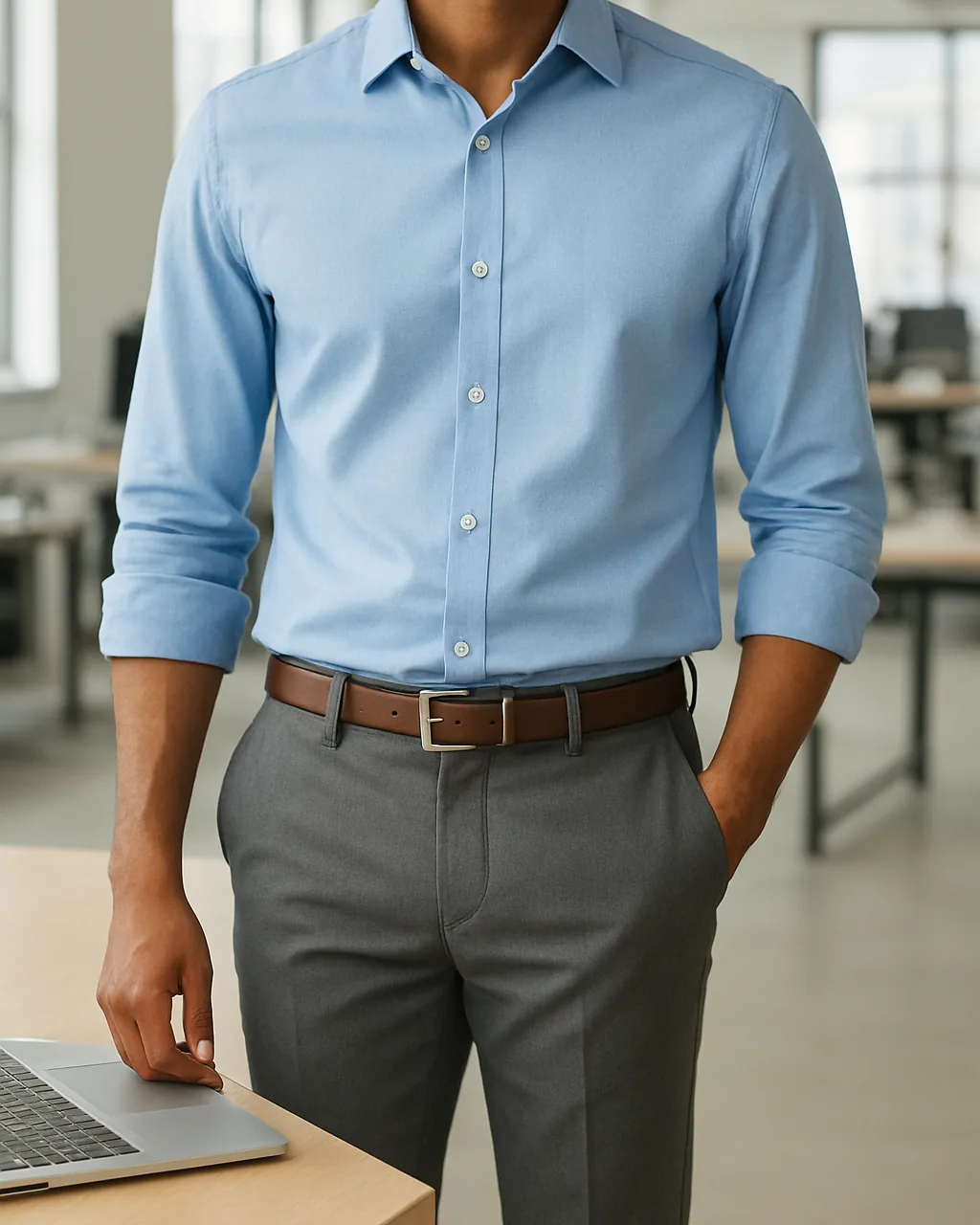
The core of office formal wear is a shirt and trousers. Build a two-week rotation from these pieces:
- Shirts: white, light blue, pale pink, lavender, fine stripes and small checks.
- Trousers: charcoal, mid grey, navy, beige and black.
- One navy blazer and one grey blazer for meetings.
- Black and brown leather shoes with matching belts.
Point and spread collars are the standard for formal shirts; button-down collars are more casual. Fit matters more than brand: the shoulder seam should sit on your shoulder, and trousers should have a slight or no break. Our shirts for men guide and formal trousers guide go deeper.
Interview Dress for Men
For an interview, dress one level above the company's daily dress code. Here is a reliable process:
- Check the company. Look at photos from their office, LinkedIn or careers page.
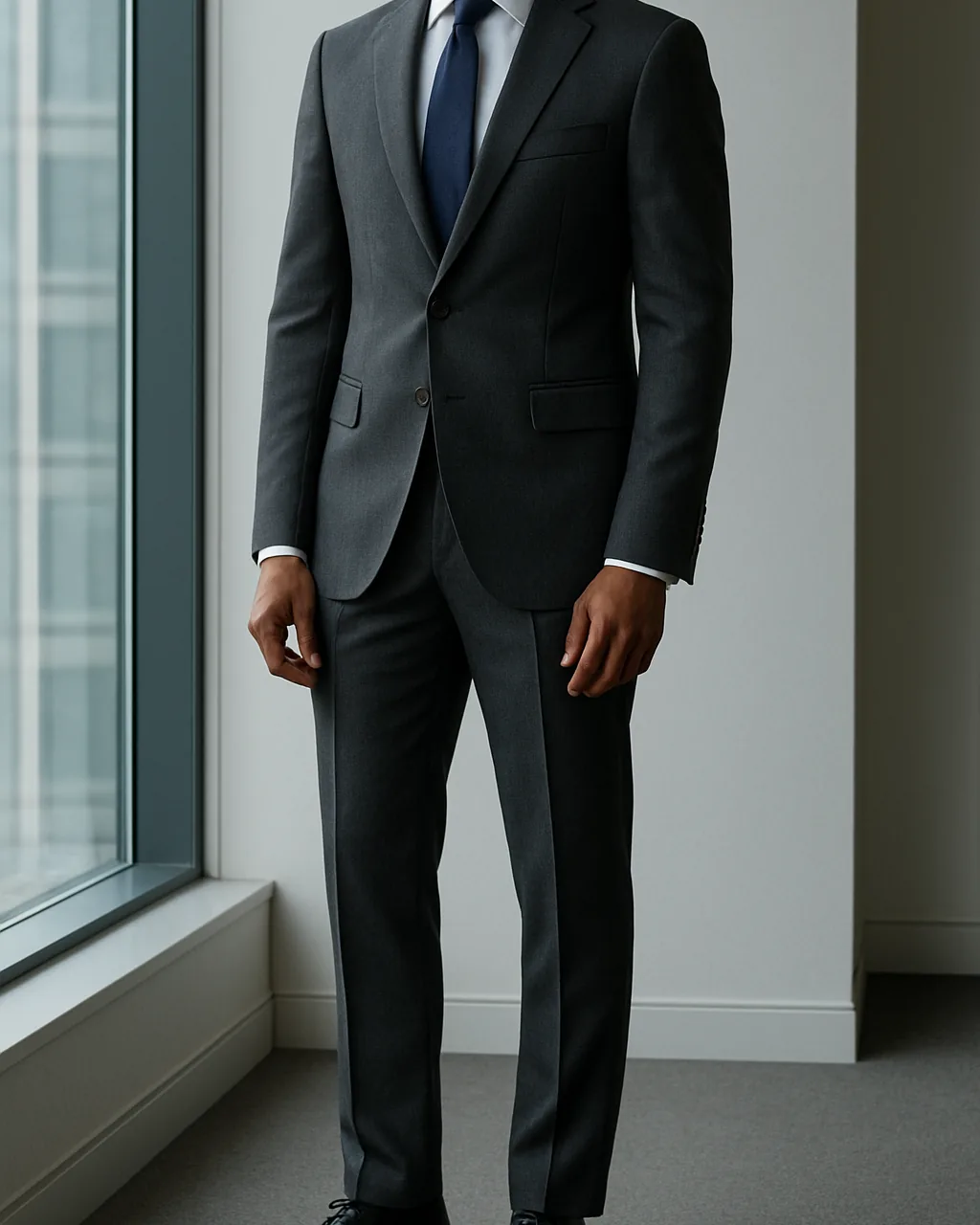
- Default to a navy or charcoal suit for banking, law, consulting and government roles.
- Choose a white or light blue shirt, freshly ironed with a crisp collar.
- Add a plain or subtly patterned tie in navy, burgundy or grey for formal roles; skip it for start-ups where a blazer without tie is enough.
- Wear polished black or dark brown Oxfords with a matching belt and dark socks.
- Keep accessories minimal: a simple watch, no loud cufflinks or rings.
- Get a trim a few days before. Short, neat hairstyles for interview look tidy; keep a beard well shaped.
- Try the full outfit the day before and check for loose buttons and creases.
For suit fit details, see our coat pant for men guide.
Semi Formal Dress for Men
Semi formal is the most useful and most misread dress code. Think of it as a suit's relaxed cousin:
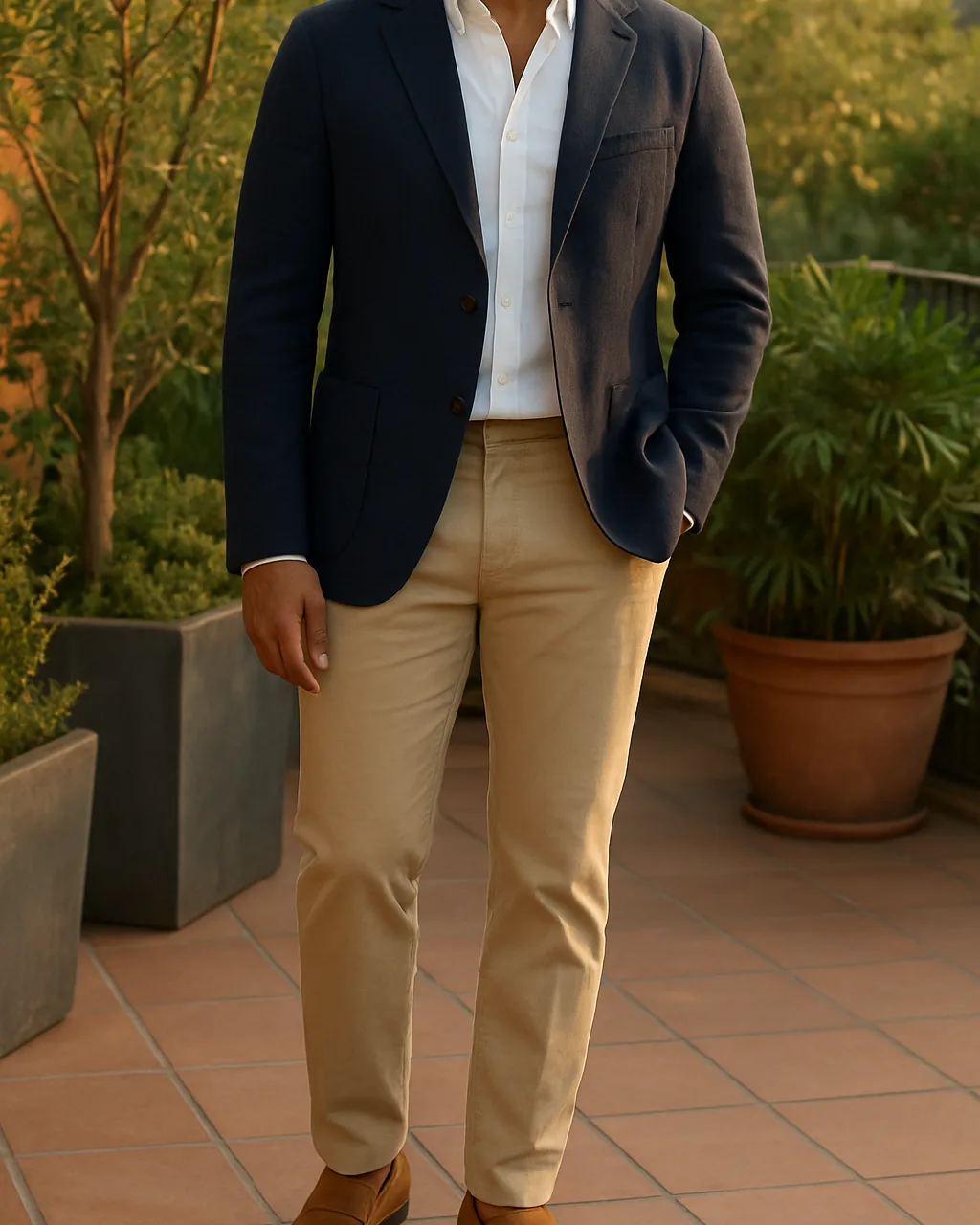
- Navy blazer, white shirt, grey trousers, brown loafers.
- Grey blazer, light blue shirt, navy chinos, suede loafers.
- Fine-knit polo, beige chinos, dark brown belt and loafers.
- Dark jeans, crisp white shirt, unstructured blazer.
No tie is needed. Fabrics can be more textured and colours a little softer. A blazer for men is the single piece that makes semi formal outfits work.
Formal Dress for Men for Party and Weddings
Evening parties allow darker colours and richer fabrics. A black formal dress for men look, such as a black suit or black blazer with a black or white shirt, is sharp for evening events. Velvet or jacquard blazers suit festive office parties.
For weddings, formal dress for men for wedding receptions usually means a dark suit, a three-piece or a Jodhpuri. Our wedding dress for men guide covers each function.
Formal Dress Combinations and Colours
| Shirt | Trousers | Shoes |
|---|---|---|
| White | Charcoal, navy, black | Black |
| Light blue | Grey, navy, beige | Black or brown |
| Pale pink | Navy, grey | Brown |
| Lavender | Charcoal, black | Black |
| Fine stripe | Solid grey or navy | Black or brown |
For formal dress for dark skin men, crisp white, light blue, lavender, burgundy ties and navy or charcoal suits create clean contrast. Avoid muddy browns and beiges close to your skin tone near the face. More in our colour combinations for men guide.
Office Wear Shoes and Winter Office Wear
Office wear shoes for mens formal looks: black Oxfords for suits, brown Derbies or loafers for business casual, and suede loafers for smart casual Fridays. Keep them polished; scuffed shoes undo a sharp outfit.
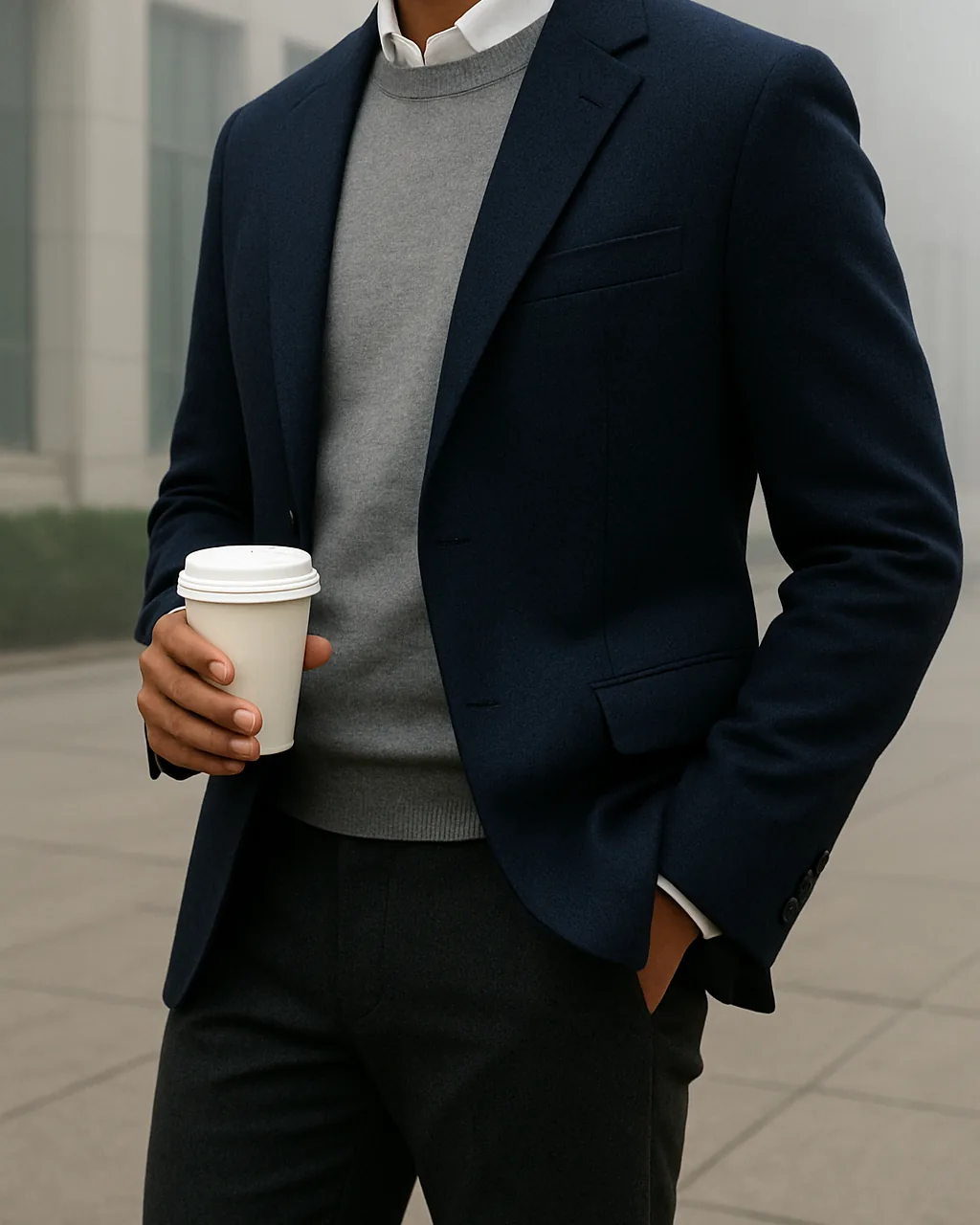
For winter office wear for mens wardrobes in north India, layer a fine merino sweater or a sleeveless pullover under a blazer, and switch to flannel or wool trousers. Woolmark notes merino absorbs moisture vapour and releases it into the air, so it stays comfortable in heated offices. Add an overcoat for the commute.
Questions men ask
What is formal dress for men?
Formal dress for men usually means a dark suit, a collared dress shirt, a tie and polished leather shoes. In most Indian offices, everyday formal wear is a formal shirt with trousers and leather shoes, with a blazer added for meetings. Evening formal events may call for a tuxedo or a bandhgala.
What should a man wear for a job interview?
Dress one level above the company's normal dress code. For banking, law, government or consulting, wear a navy or charcoal suit, white or light blue shirt, simple tie and black Oxfords. For start-ups, a blazer with a shirt and trousers and no tie is usually enough.
What is semi formal dress for men?
Semi formal sits between business and casual. A blazer with chinos or trousers, a collared shirt or fine polo and loafers is the standard version. No tie is required. It suits dinners, office parties and smart events where a full suit would feel too stiff.
What is the best formal dress combination for men?
A white or light blue shirt with charcoal or navy trousers and black shoes is the most reliable formal combination. Pale pink with navy, and lavender with charcoal, are good variations. Keep the belt the same colour as the shoes and choose dark socks that match the trousers.
Which colour formal dress suits dark skin men?
Clear, contrasting colours work best: crisp white, light blue, lavender and pale pink shirts with navy, charcoal or black suits and trousers. Burgundy and deep green ties add richness. Avoid dull beige and muddy brown near the face, as they can blend with darker skin tones.
What shoes go with formal wear for men?
Black Oxfords are the most formal choice and suit dark suits and interviews. Brown Derbies and loafers are right for business casual. Suede loafers and clean leather sneakers suit smart casual Fridays. Always match the belt to the shoes and keep both polished.
Sources: Aditya Birla: Allen Solly and Friday Dressing · ABFRL: Allen Solly brand release · MasterClass: types of shirt collars · Woolmark: the fibre. Updated 14 October 2026.