Ethnic and wedding
Sherwani for Men: Styles, Fit and Wedding Styling
The sherwani is the most formal garment in Indian menswear and usually the one a groom remembers longest. Learn the main styles, how it should fit, and which dupatta, safa and shoes complete it.
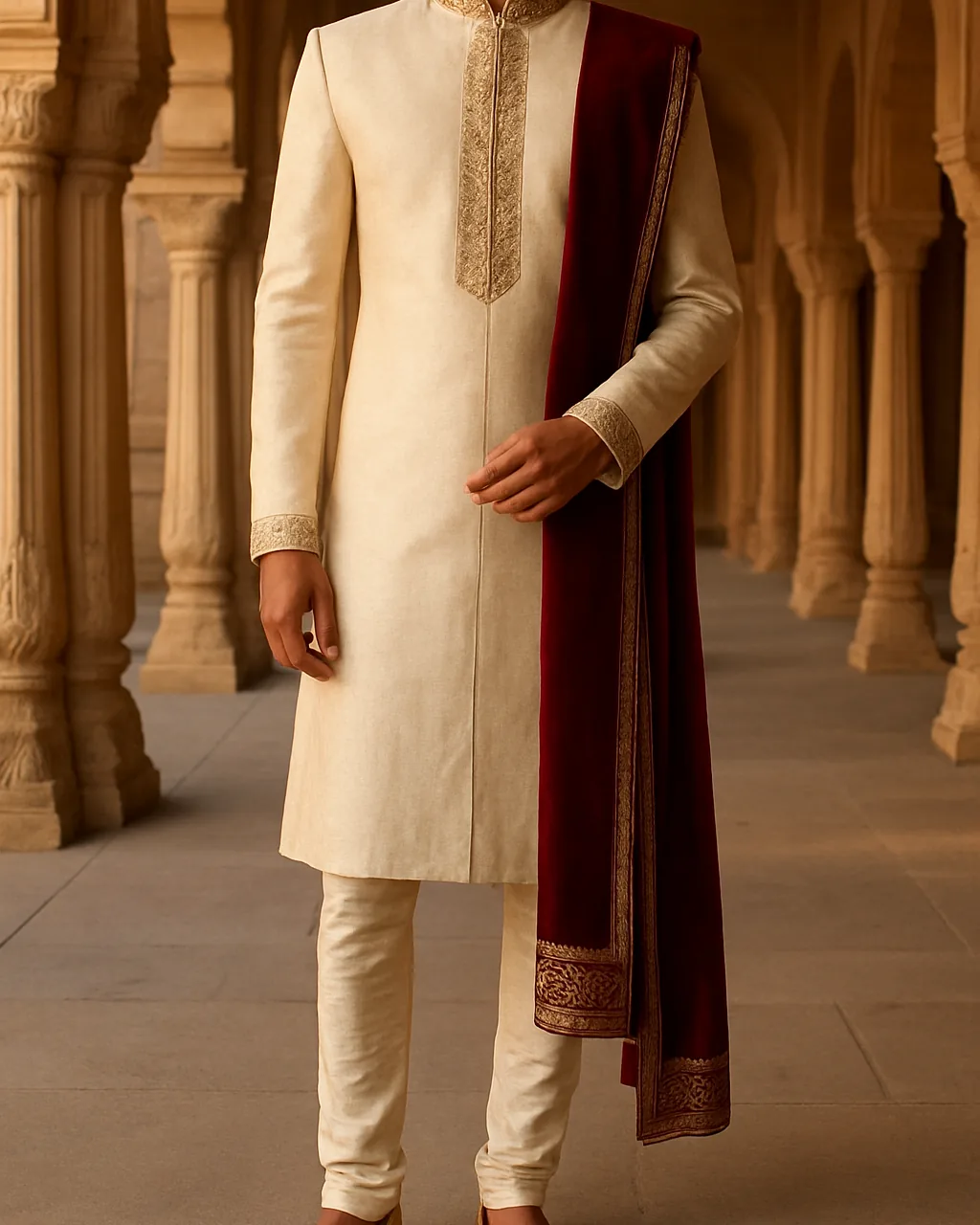
A sherwani carries weight. It is the outfit in the wedding album, on the mandap and in every family photo for years afterwards. The Royal Ontario Museum notes that the sherwani is often seen at social functions, weddings and in film, and that is still exactly where it belongs.
Getting it right means understanding the style options, choosing a fabric for the season, and leaving enough time for fittings. This guide covers all three, plus the accessories that make a sherwani for groom look complete rather than costume-like.
Sherwani vs Achkan: What Is the Difference?
The two are related but not the same. According to the Royal Ontario Museum, the sherwani is based on the achkan, which it describes as a more loose-fitting tunic with a stand-up collar and long sleeves. Unlike the achkan, the sherwani falls below the knee, is more tailored, has Western-style buttons and a wider flare at the hem.
Another commonly cited difference is the opening: sherwanis button straight down the front, while achkans traditionally had a side opening. The ROM cites researcher Dr. Toolika Gupta, who dates the sherwani to the late 1880s and links it to British influence in India.
| Sherwani | Achkan | |
|---|---|---|
| Length | Below the knee | Around the knee |
| Fit | More tailored | Looser |
| Opening | Straight front | Traditionally side |
| Best for | Groom, main ceremony | Groom's family, formal guests |
If you want the look in a lighter form, an achkan for men or achkan suit is a natural choice for fathers and brothers.
Sherwani Designs for Men
Royal sherwani for groom
Heavy brocade or velvet with zari or zardozi work, often in ivory, gold, maroon or deep red. It suits a palace or banquet wedding and a groom who wants a classic look. Balance heavy embroidery with a plain churidar.
Classic straight sherwani
Clean lines, minimal embroidery on the collar and cuffs, and a solid colour. It photographs well and suits slimmer or taller men. A good choice for a modern sherwani for men who prefer restraint.
Indo western sherwani for men
A shorter or asymmetric sherwani, sometimes with a layered front or draped panel, worn with slim trousers. It works for a sangeet or a cocktail wedding. See more fusion ideas in our indo western for men guide.
Open sherwani for men
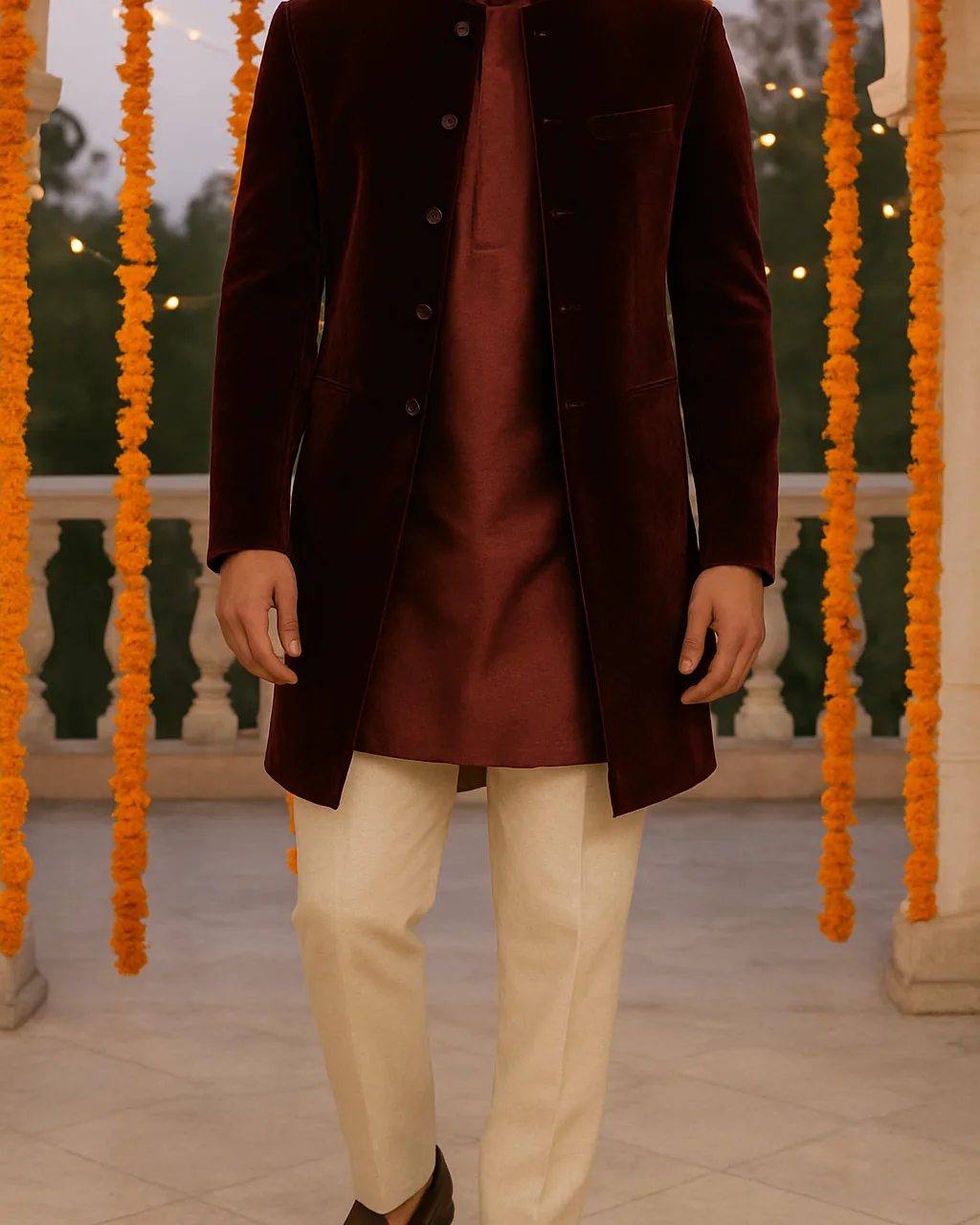
Worn unbuttoned over a matching kurta, like a long jacket. It is easier to move and dance in, and suits shorter men because the vertical line of the open front adds height.
Jodhpuri sherwani for men
Combines the sharp closed collar and structured shoulders associated with the Jodhpuri suit with sherwani length. It suits broad shoulders and a formal evening wedding.
Short sherwani for men
Ends at mid-thigh, between a bandhgala and a full sherwani. A good choice for a brother of the groom or for a reception.
Black and white sherwani for men
A white sherwani for men in ivory or off-white with tonal embroidery is timeless for day weddings. A black sherwani for men is bold for evening and reception looks; add gold or silver detailing so it does not read as plain.
Fabrics and Colours by Season
The ROM notes that sherwanis and achkans can be made from brocade, block-printed or embroidered fabric. Banaras brocade, a GI-registered textile according to the Varanasi district administration, is known for Mughal-influenced floral motifs and zari work, which is why it appears so often in wedding sherwanis.
- Winter weddings: velvet, heavy brocade and wool-silk blends in maroon, bottle green, navy and wine.
- Summer and day weddings: raw silk, cotton silk or linen blends in ivory, pastel peach, mint and powder blue.
- Destination or beach weddings: lighter silks and linens, pale colours and minimal embroidery.
Match your colour to the bride's outfit in tone rather than copying it. Our colour combinations guide has pairings that work.
How a Sherwani Should Fit
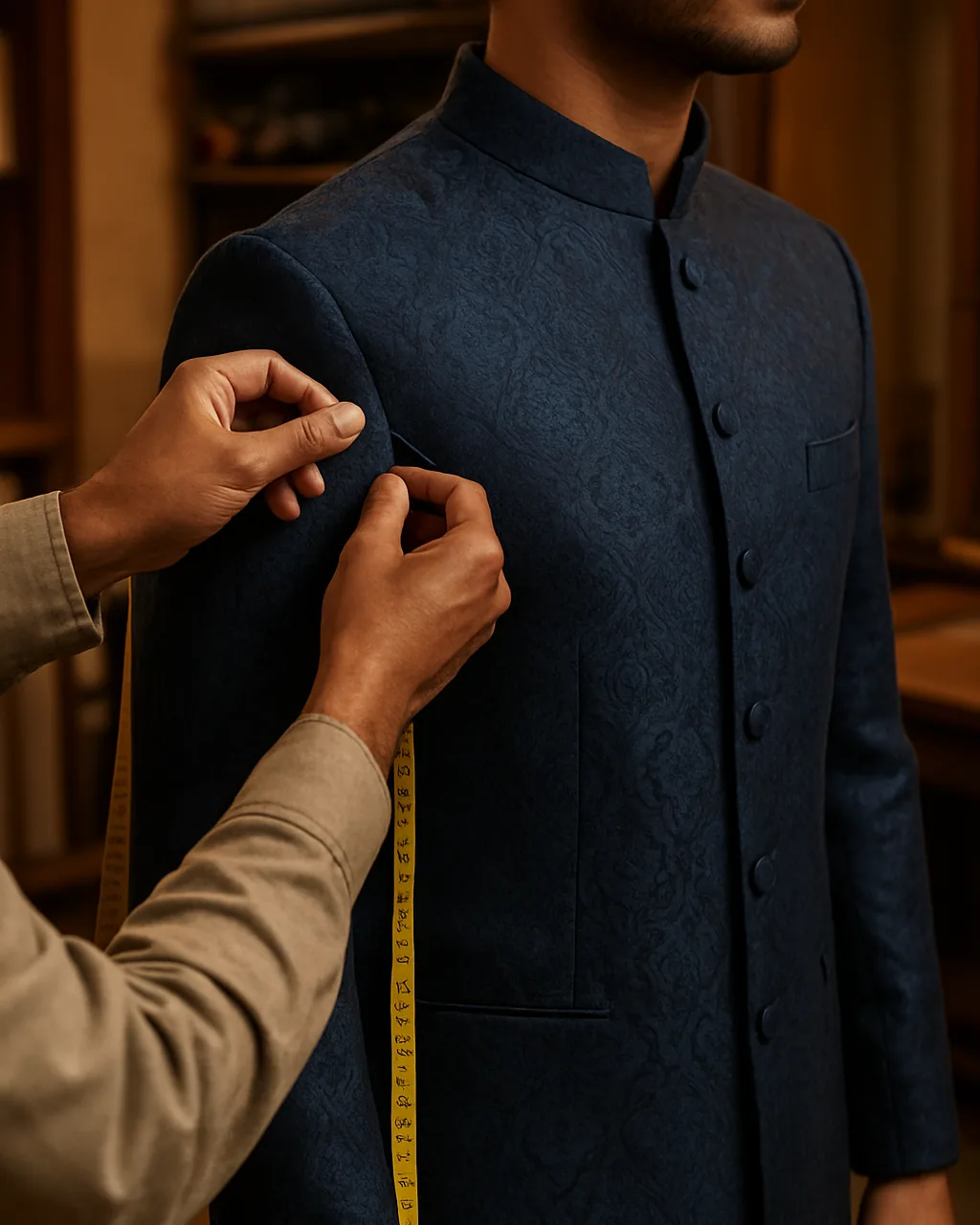
- Shoulders: the seam should end exactly at your shoulder bone, with no dimple or overhang.
- Chest: buttons should close without pulling into an X shape. You should be able to raise your arms to put on a garland.
- Waist: lightly shaped, not tight. You will be sitting through long ceremonies and eating.
- Length: just below the knee for a classic sherwani, a little shorter if you are under average height.
- Sleeves: end at the wrist bone so a little of your hand and any kada or watch shows.
- Churidar: snug through the calf with neat gathers at the ankle; straight pants should just touch the shoe.
- Test sitting and bending at every fitting, not just standing in front of the mirror.
Plan two or three fittings, and finish the last one at least a week before the wedding. Take measurements carefully using our men's size guide.
Dupatta, Safa, Shoes and Other Accessories
- Dupatta for men's sherwani: worn over one shoulder or draped across both. Choose a contrast colour with a matching border, such as a red or maroon dupatta over an ivory sherwani.
- Safa or pagdi: pick a tone from the embroidery, and get it tied by someone experienced on the day.
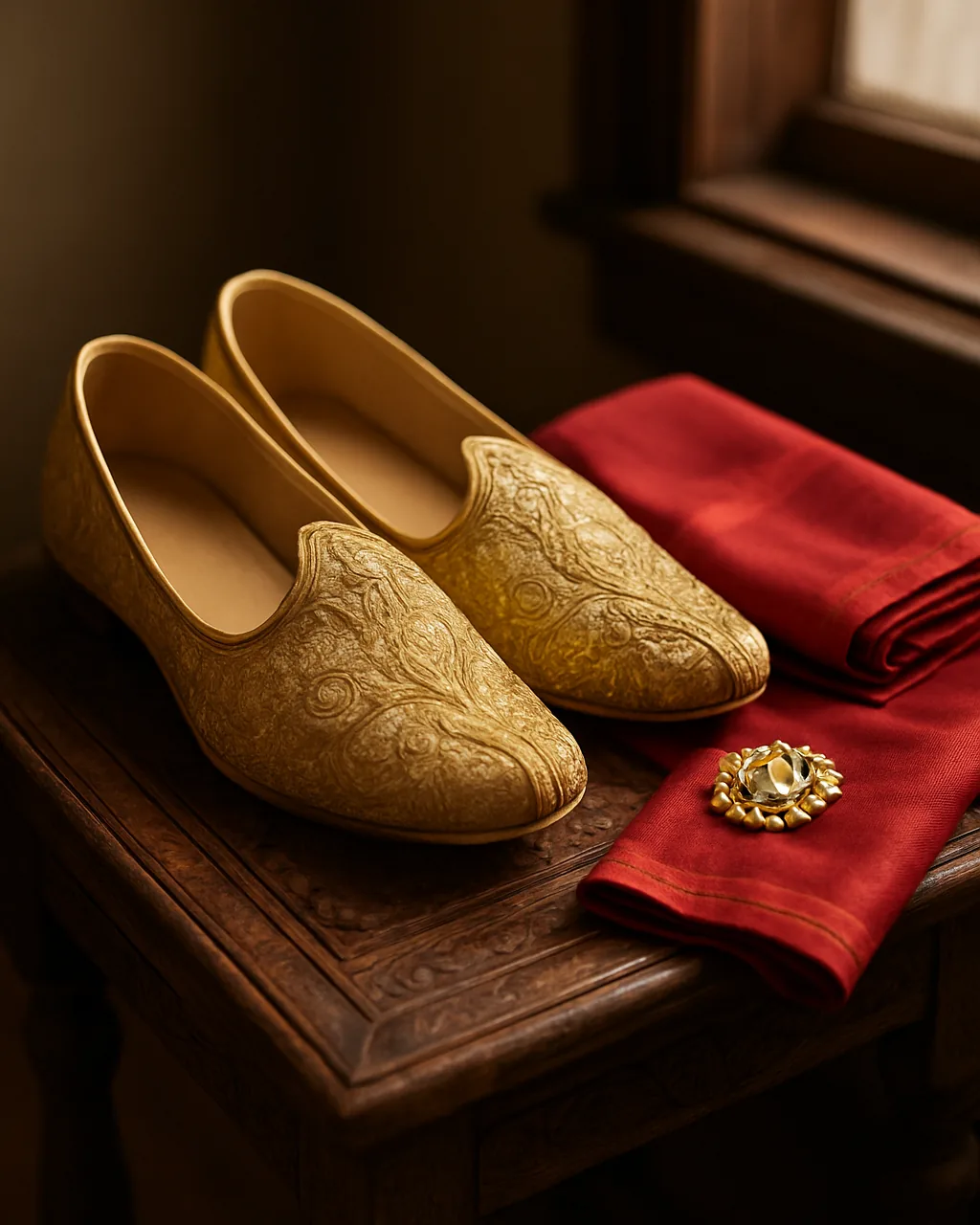
- Sherwani shoes for men: mojaris or juttis in gold, ivory or matching tones are traditional. Break them in for a week beforehand.
- Brooch and mala: one brooch on the chest or safa, one pearl or bead mala at most.
- Stole or shawl: useful for winter outdoor pheras.
Less is more. If the sherwani is heavily worked, keep the accessories simple.
Buying a Sherwani: Ready-Made, Rental or Custom
Ready-made sherwanis from wedding wear labels are the quickest route. Manyavar, for example, is a brand of Vedant Fashions, a Kolkata-based company that describes itself as the category leader in branded Indian wedding and celebration wear. Whichever store you visit, budget for alterations, because off-the-rack shoulders and lengths rarely fit perfectly.
Custom tailoring gives the best fit but needs six to eight weeks. Rentals suit a one-time look for a sangeet or reception, but always try them on in advance. For the rest of the wedding wardrobe, see our wedding dress for men guide, our engagement dress guide, and the kurta guide for haldi and mehndi.
Questions men ask
Which sherwani is best for a groom?
A classic below-knee sherwani in ivory, gold, maroon or a deep jewel tone is the safest and most photogenic choice for the main ceremony. Pick heavy brocade or velvet for winter and raw silk for summer. Make sure it is tailored at the shoulders and allows you to sit comfortably for long rituals.
What shoes should I wear with a sherwani?
Mojaris or juttis are the traditional choice, in gold, ivory or a tone that matches the embroidery. Avoid formal Oxford shoes with a classic sherwani as they look mismatched. Break new juttis in for about a week before the wedding, since stiff leather can be painful during long ceremonies.
What is the difference between sherwani and Jodhpuri?
A Jodhpuri or bandhgala is a hip-length jacket with a closed high collar worn with trousers. A sherwani is a long coat that falls below the knee and is worn with churidar or straight pants. The sherwani is more ceremonial, while a Jodhpuri suits receptions and guests.
How many days before the wedding should I order a sherwani?
For a custom sherwani, allow six to eight weeks so there is time for two or three fittings. For ready-made pieces, buy at least three to four weeks ahead to leave room for alterations. Finish the final fitting about a week before the wedding to avoid last-minute stress.
Can a wedding guest wear a sherwani?
Close family such as fathers, brothers and uncles often wear sherwanis or achkans. A general guest can, but should choose a lighter style with less embroidery and avoid the groom's colour. A bandhgala, kurta set with bandi or short sherwani is usually the more considerate option.
How do I wear a dupatta with a sherwani?
The simplest drape is over the left shoulder, falling down the front and back. You can also drape it across both shoulders, or pleat it and pin it at the shoulder with a brooch. Choose a contrast colour that picks up a tone from the sherwani's embroidery.
Sources: Royal Ontario Museum: the sherwani · Wikipedia: Achkan · Varanasi district: Banaras brocades GI · Vedant Fashions filing (BSE). Updated 14 October 2026.