Denim and trousers
Formal Trousers for Men: Fits, Fabrics and Pleats
Formal trousers for men decide whether an office outfit looks sharp or sloppy. Here is how to choose the fit, pleats, fabric and length, plus where chinos and other pants fit in.
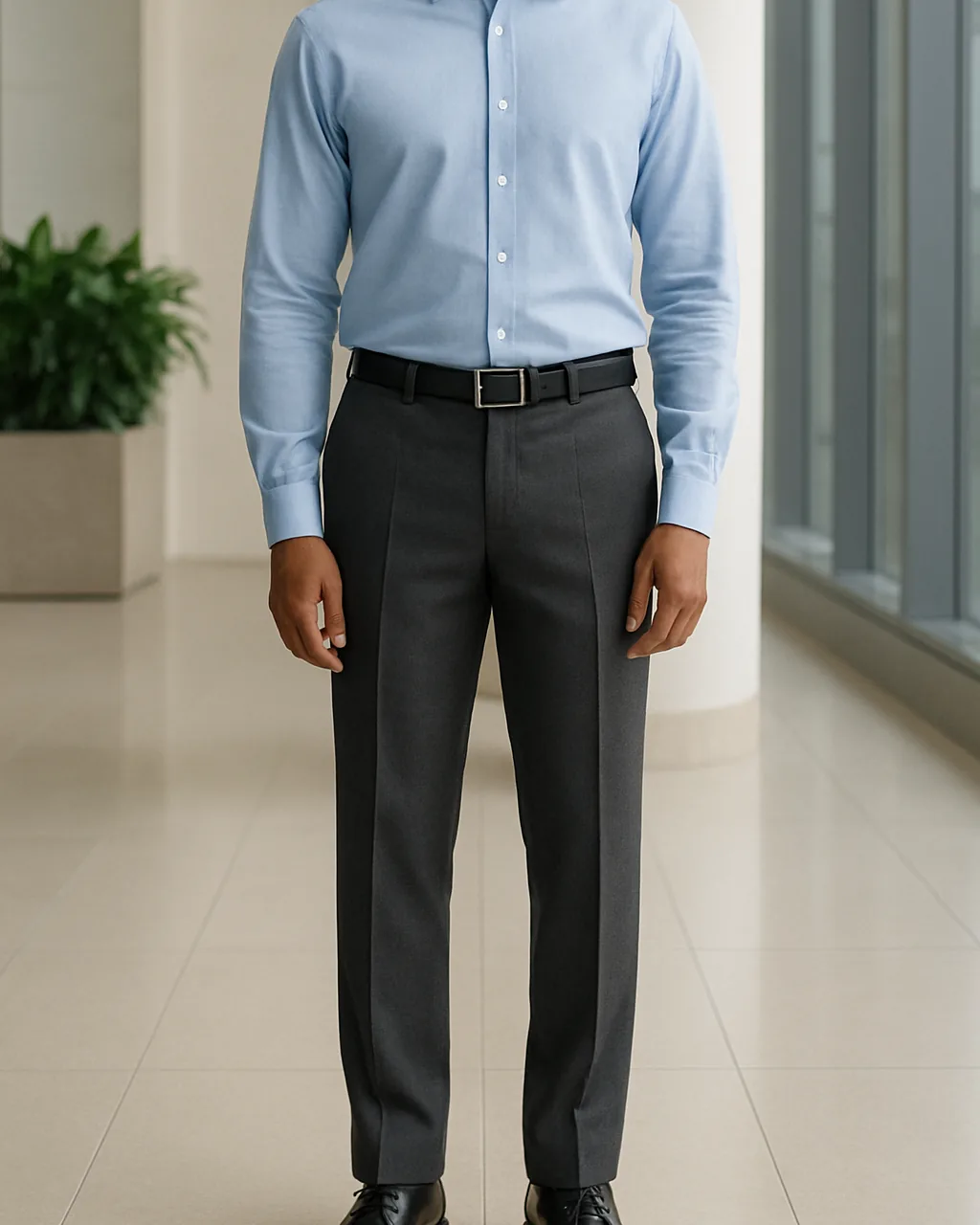
Most men spend more time choosing a shirt than the trousers under it, yet trousers do more to shape the outline of an outfit. A pair that is too long, too tight across the seat or shiny with cheap fabric spoils even a good shirt and blazer.
This guide focuses on formal trousers for men and formal pants for the office, then covers chinos and the other types of pants men commonly buy. For shirts to pair, see our shirts guide; for full workwear, see the formal dress guide; and if you are buying a matching jacket, read our suit guide.
Types of pants for men
| Type | What it is | Where it works |
|---|---|---|
| Formal trousers | Smooth suiting fabric, pressed crease, belt loops or side adjusters | Office, interviews, weddings with a blazer |
| Chinos | Cotton twill, softer, often flat front | Smart casual offices, weekends, travel |
| Cotton or linen pants | Breathable, relaxed, often drawstring or flat front | Summer days, holidays, festive lunches |
| Jeans | Denim, five-pocket | Casual, some relaxed offices |
| Track pants and sweatpants | Knit, elastic waist | Gym, home, travel |
For denim, see our jeans guide; for track pants, sweatpants and gym pants for men, see joggers and track pants; for utility styles, see cargo pants.
Trouser fits: slim, straight, relaxed and bootcut
Slim fit
Narrow through the thigh and tapered to the ankle. Sharp on lean builds; avoid if the fabric pulls across your thighs or pockets flare open.
Straight fit pants for men
Even width from knee to hem. The most versatile cut for office wear and for most body types, including men with heavier legs.
Relaxed and loose fit pants
More room in the seat and thigh, often with pleats. Relaxed fit pants for men are comfortable in Indian summers and are coming back as a softer, more relaxed tailoring look. Keep the length neat so they do not look sloppy.
Bootcut formal pants
A slight flare from the knee. Bootcut pants for men read as retro in most offices today; if you like them, keep the flare subtle and wear them with a substantial shoe.
Baggy and bell bottom pants
These are fashion pieces, not office trousers. Save baggy pants and bell bottoms for casual outfits with a fitted top.
Flat front vs pleated trousers
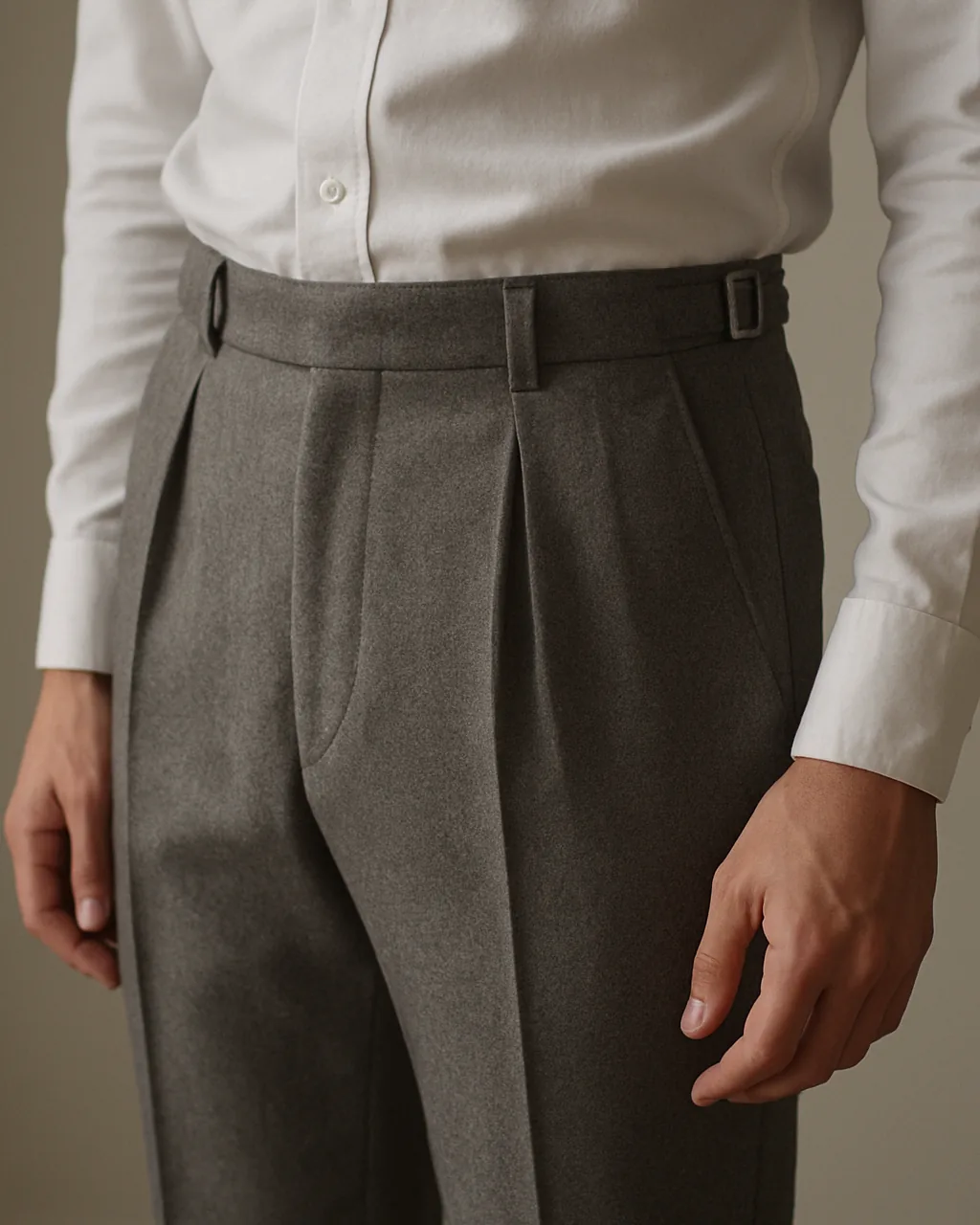
Pleats are folds just below the waistband that open up when you sit; flat-front trousers have none. Forward pleats open toward the fly, and reverse pleats open toward the pockets.
- Flat front: clean and modern. Best for slim and average builds and slim or straight fits.
- Single pleat: adds a little room in the hip and thigh. Comfortable for men with bigger thighs or a fuller seat, and it suits relaxed tailoring.
- Double pleats: more volume and a classic look. Pair with a fitted shirt so the outfit does not look baggy all over.
Whichever you choose, the pleats should lie flat when you stand. If they pull open, the trousers are too tight at the hip.
Trouser length and break
The "break" is the fold where the trouser hem meets your shoe. Common conventions are:
- No break: the hem barely touches the shoe, with no crease. Modern and sharp, best with slim or tapered trousers.
- Quarter or slight break: a tiny fold. The safest choice for office trousers.
- Half or medium break: one soft fold. Classic and forgiving, good with straight fits.
- Full break: one generous fold. Traditional, but can look long on shorter men.
Most ready-made formal trousers are sold long so they can be hemmed. A tailor's alteration is the cheapest way to make budget trousers look expensive.
Fabrics for formal pants: wool, poly-viscose, cotton and stretch
Wool and wool blends: drape well, hold a crease and recover from wrinkles. Woolmark notes merino absorbs moisture vapour and releases it into the air, helping regulate the microclimate next to the skin, so lightweight wool works in more Indian weather than people expect.
Poly-viscose: the most common fabric for ready-made formal trousers in India. Polyester is strong and resists shrinking, stretching and creasing, while viscose (regenerated cellulose) adds softness and drape. Easy care, but less breathable than wool or cotton.
Cotton pants for men and chinos: cotton twill is breathable and casual; it creases more and fades over time.
Lycra pants for men: Lycra is a trademarked spandex fibre. A small percentage in trouser fabric adds stretch and comfort for long days. Too much and the fabric can look shiny or cling.
Linen: cool and breathable but wrinkles easily; see our linen guide for linen formal pants.
Chinos for men
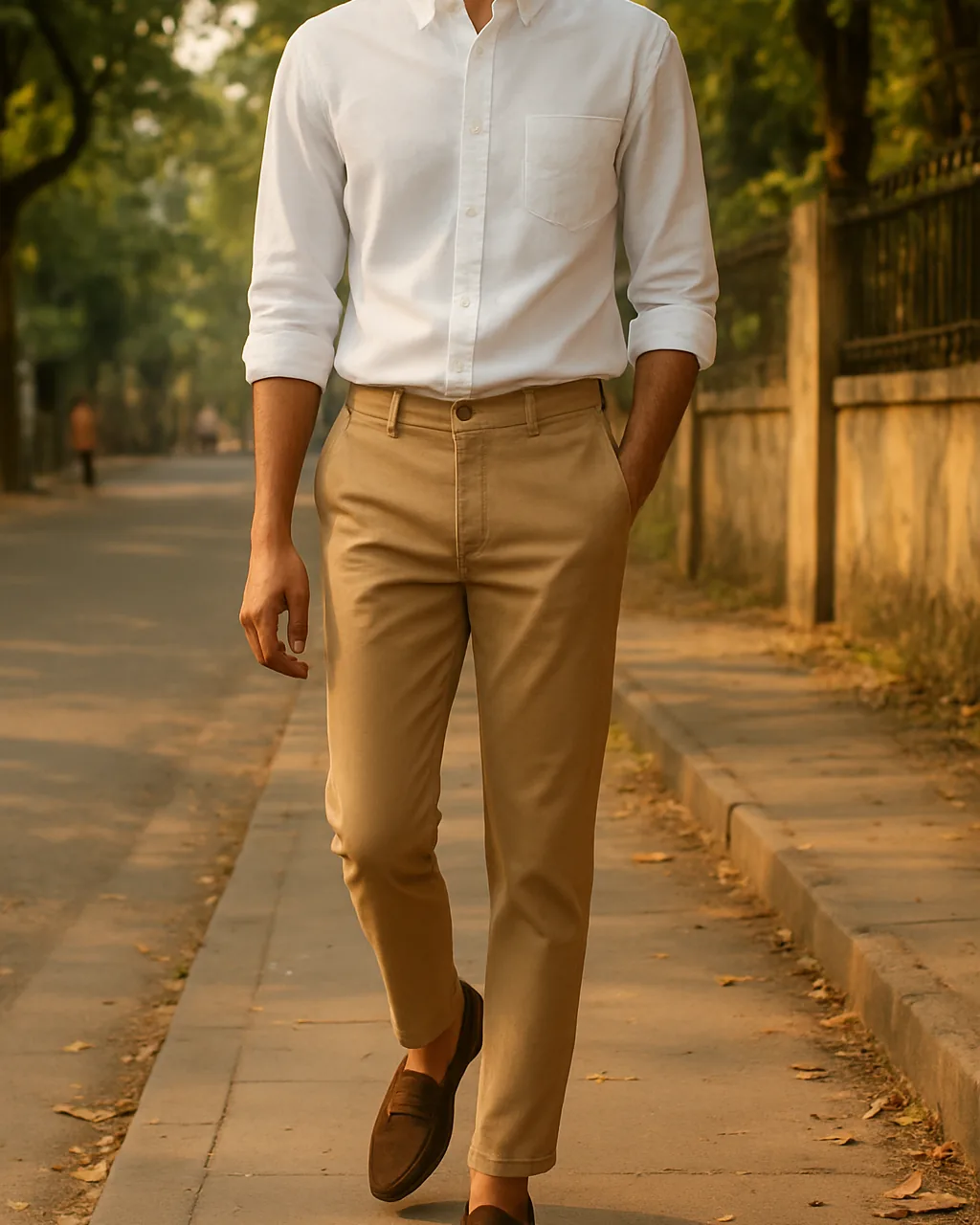
Chinos are cotton twill trousers that sit between jeans and formal trousers. They are the backbone of smart casual dressing, the look Allen Solly is known for through its "Friday Dressing" smart casuals; the brand was launched in India in 1993, and its first Friday Dressing ad ran in 1995.
Start with beige or khaki, navy and olive. Wear chinos with oxford shirts, polos, knit tees and loafers or clean sneakers. Keep the fit slim or straight and the length at no break or slight break so they look neat.
How to buy trousers that fit
- Measure your waist at about navel level with one finger between body and tape, and note where you actually wear your trousers.
- Measure your inseam with shoes off, from the lowest part of the crotch down the inner leg.
- Check the brand chart: Indian brands still use their own size charts, so compare waist, hip and thigh figures, not just the size label.
- Sit and squat in the trial room: the waist should not dig in and pockets should not flare.
- Hem to your shoes: take the shoes you will wear most to the tailor and choose your break.
Our size guide walks through comparing body and garment measurements.
Questions men ask
Which colour formal trousers should a man have?
Start with charcoal grey and navy, which pair with almost every shirt colour. Add mid grey and beige next, then black for evenings and functions. These five cover most office and occasion needs. Lighter colours like cream and white are for summer and holiday wear rather than daily office use.
Are pleated trousers in fashion?
Yes. Pleated trousers have returned with the trend toward relaxed tailoring, especially single pleats in wool or linen. They add comfort in the hip and thigh and suit men with bigger legs. Flat front trousers are still the cleaner, more common choice for slim builds and modern office wear.
What is the difference between chinos and formal trousers?
Chinos are made of cotton twill and look casual to smart casual, usually without a pressed crease. Formal trousers use smooth suiting fabrics like wool or poly-viscose, often with a sharp crease. Chinos suit casual offices and weekends, while formal trousers suit meetings, interviews and events.
How long should formal trousers be?
Most men look best with a slight or quarter break, where the hem just touches the shoe with a small fold. A no-break hem looks sharp with slim trousers, while a half break suits straight fits. Hem your trousers wearing the shoes you use most often.
Which fabric is best for formal pants in summer?
Lightweight wool, wool blends, cotton and linen breathe better than heavy polyester-rich fabrics. Linen feels coolest but wrinkles easily. Poly-viscose is easy to care for and holds a crease, but can feel warm in humid weather. Choose a light, breathable fabric for long days in hot cities.
Are slim fit trousers good for heavy thighs?
Usually not. Slim fit trousers can pull across the thigh, flare the pockets and wrinkle at the knee if your legs are muscular or heavy. A straight fit, or a single pleated trouser with a gentle taper, gives more room while still looking tidy.
Sources: Flat front vs pleated (Black Lapel) · Trouser break (Effortless Gent) · Wool fibre (Woolmark) · Polyester fiber (MFA Boston CAMEO) · Allen Solly brand identity (ABFRL) · How Friday Dressing became Indian work wear. Updated 14 October 2026.